
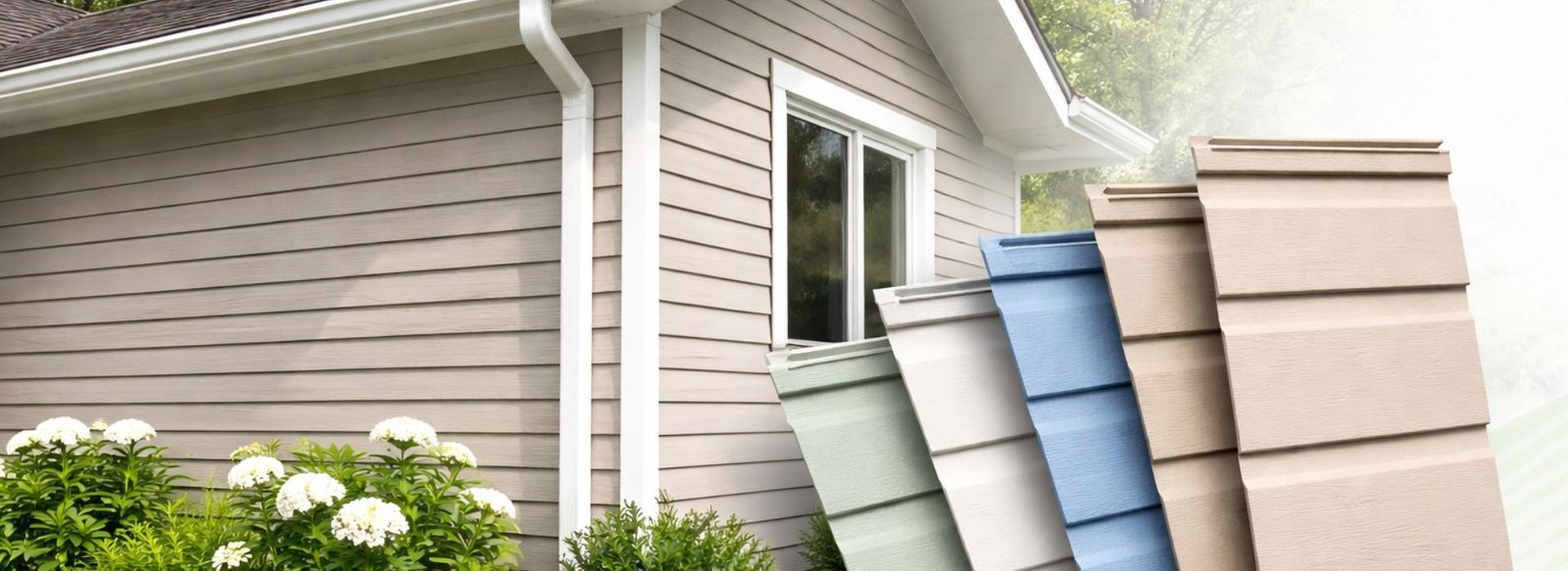
If you ask ten homeowners why they want new siding, you’ll usually hear a mix of answers. Some want the house to look fresh again. Some are tired of repainting every few years. Others are dealing with moisture problems, cracked boards, or siding that has simply reached the end of its life.
Whatever the reason, choosing siding isn’t just about appearance. It’s about how your home handles weather, moisture, maintenance, and long-term value.
After more than two decades covering construction and home remodeling projects, one thing has become very clear: the “best” siding material doesn’t exist in absolute terms. The right choice depends on the house, the climate, and the expectations of the homeowner.
Let’s walk through how to choose the right siding material in 2026 in a practical and straightforward way.
Start with the climate your home actually faces
Siding sits on the front line of your home. Sun, rain, wind, snow, and temperature swings all hit it first. Because of that, climate should influence your decision more than trends or colors.
For example:
- Rainy climates demand materials that handle moisture well.
- Hot sunny regions require siding that resists fading and heat damage.
- Cold climates benefit from materials that tolerate expansion and contraction.
In wetter environments, materials such as fiber cement and vinyl siding tend to perform well because they resist moisture and rot. Natural wood siding can still be a great option, but it requires more maintenance in those conditions.
Think about how much maintenance you’re willing to do
Every siding material asks something from the homeowner. The real question is simple: how much work do you want to deal with over the next 20 to 30 years?
Vinyl siding
Vinyl siding remains one of the most widely installed exterior claddings on residential homes. It is popular mainly because maintenance requirements are low.
Typical characteristics include:
- No painting required
- Resistance to moisture and insects
- Occasional cleaning with water and mild detergent
However, extreme heat can sometimes cause warping in lower-quality products, and strong impacts may crack panels.
Fiber cement siding
Fiber cement siding has become increasingly popular over the past decade. It is made from a mixture of cement, sand, and cellulose fibers, and it is designed to replicate the appearance of painted wood while offering improved durability.
Common benefits include:
- Excellent resistance to moisture
- Long lifespan
- Strong resistance to insects and fire
The main trade-off is installation complexity. Fiber cement boards are heavier than vinyl and require experienced installers.
Wood siding
Few materials match the natural appearance of real wood siding. Cedar, in particular, has been used on homes for generations.
Advantages include:
- Natural and timeless appearance
- High curb appeal
- Strong architectural character
The downside is maintenance. Wood siding typically requires repainting or staining over time and must be monitored for moisture exposure.
Engineered wood siding
Engineered wood products were developed to combine the appearance of real wood with improved durability. They are typically manufactured using wood fibers bonded with resins and protected with specialized coatings.
Compared with traditional wood siding, engineered wood generally offers:
- Better resistance to moisture
- Stronger impact resistance
- Lower maintenance requirements
Metal siding
Metal siding, especially steel and aluminum, is increasingly used on modern homes.
Benefits typically include:
- Exceptional durability
- Fire resistance
- Minimal maintenance
Metal siding performs very well in harsh climates, although its appearance is not always the preferred choice for traditional residential architecture.
Consider long-term value, not just installation cost
When homeowners compare siding options, the first number they often focus on is installation cost. However, the more important figure is the lifetime cost of the siding system.
This includes:
- Installation
- Maintenance
- Repairs
- Repainting
- Replacement over time
For example, wood siding may have a lower initial cost but require repainting every several years. Vinyl siding may require less long-term maintenance.
Looking at the full life cycle of the material often gives a much clearer picture of the true cost.
Consider the architecture of the home
The right siding should complement the architecture of the house. Some materials simply work better with certain styles.
For example:
- Modern homes often pair well with fiber cement panels or metal siding.
- Traditional homes frequently use horizontal lap siding in vinyl or wood.
- Craftsman homes commonly feature cedar shakes or shingle siding.
Matching the siding to the architectural style helps maintain the visual balance of the home.
Installation quality matters more than the material
Even the best siding material can fail if it is installed incorrectly.
Common issues caused by poor installation include:
- Moisture intrusion behind panels
- Improper flashing around windows and doors
- Warping or buckling siding
- Premature deterioration
Professional installation and proper wall protection layers behind the siding are essential for long-term performance.
A simple way to narrow your options
When homeowners feel overwhelmed by siding choices, it helps to focus on three practical questions:
- How much maintenance are you comfortable with over the next two decades?
- What type of weather does your home experience every year?
- What siding style fits the architecture of your house?
Answering those questions usually reduces the list of options quickly.
Choosing siding is not only about aesthetics. It is about protecting the structure of the home, controlling maintenance over decades, and improving the appearance of the property.
Modern siding materials are significantly more advanced than they were twenty years ago. Vinyl siding has improved, fiber cement has become widely trusted, and engineered wood now provides durability with a natural appearance.
The key is simple: choose the siding material that fits your climate, your maintenance expectations, and the architectural style of your home.
When those three factors align, the siding installed today can continue performing well for many years.